Updates
April 2019 MennoPIN Monthly Update
April 2019 Monthly Update
In This Issue
MennoPIN Live Interview on April 30 on Christian Zionism
“My Name is Palestine” – A New Song by Garth Hewitt
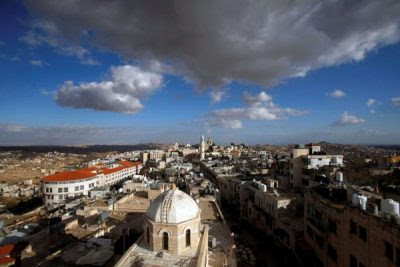
Sabeel Helps Create a New Film on Jerusalem
In Israeli Election, Palestine is the Big Loser
May 15 Nakba Day Actions
Palestinian Voices (A NEW FEATURE)
Go To Palestine (Tours)
Read More
Prayer
MennoPIN Live Interview on Christian Zionism

MennoPIN Steering Committee members, Jonathan Kuttab and Jonathan Brenneman, will be interviewed live by Jewish Voices for Peace on Christian Zionism on Tuesday, April 30, at 5:00 pm PST and 8:00 pm EST. Register to listen in here.
“My Name is Palestine” – A New Song by Garth Hewitt

Garth Hewitt has been a singer, song writer and author for over 40 years. During tours, he has visited areas of poverty, conflict and disaster throughout the world. The struggle of the people of Palestine for justice and peace holds a special place in his heart. He recently traveled to Bethlehem and visited Banksy’s Walled Off Hotel which has a gallery of Palestinian artists. There he saw a powerful and haunting painting by the Palestinian artist, Suleiman Mansour (above). The painting moved him so much that he decided to write a song sparked by what he saw. He entitled the song, “My Name is Palestine” and you can listen to it here.
Sabeel Helps Create New Film on Jerusalem

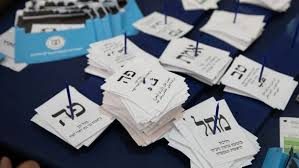
In Israeli Election, Palestine is the Big LoserThe winner (barely) of the April, 2019 snap election in Israel was Bibi (Benjamin Netanyahu), but the real loser wasn’t Benny Gantz (his opponent). The big loser was the people of Palestine. Netanyahu squeaked out a win with the help of his buddy, Donald Trump. As the election campaigning drew to a close, Trump announced his support for Israel’s annexation of the Golan Heights, which Netanyahu gleefully cheered. Indeed, Netanyahu intends to name a city in the Golan Heights after Donald Trump. It took only hours for Netanyahu to announce that if he won, he would annex key portions of the West Bank. Although Bibi and Benny garnered the same number of seats, only Netanyahu was able to form a governing coalition with extremist on the political right, and Palestinians will pay the price.It is certainly true, as Noam Chomsky pointedly stated on Democracy Now, that “if Benny Gantz had been elected instead of Netanyahu, the difference would not be very great…in terms of policy [toward Palestine]. But Diana Buttu, Palestinian-Canadian lawyer and civil rights activist, put it more bluntly, “In effect, it’s giving Netanyahu yet another green light to continue to do what he has done against Palestinians in the Gaza Strip, against Palestinians in the West Bank, against Palestinian prisoners, against Palestinians everywhere. The fact that we haven’t seen an international response against Israel has, in effect…allowed Netanyahu to turn around and say, ‘This isn’t costing me anything.’”The support of Palestinians by people of faith is needed now more than ever.
May 15 Nakba Day Actions
Kairos Palestine and Friends of Sabeel North America (FOSNA) are organizing actions around the country in support of Palestine on May 15, Nakba Day, commemorating the time in 1948-1949 when 700,000 Palestinian refugees were forced from their homes and villages into exile so that the State of Israel could be established.
Kairos Palestine has issued a statement “declaring as unjust and illegal the occupation policies and practices of the State of Israel over seven decades.” Thousands of people from all over the world has signed the statement. If you would like to add your name, click here.
FOSNA is taking the petition one step further by organizing actions around the country at the Israel embassy in Washington, DC, and consulate offices in Los Angeles, San Francisco, New York, Houston, Chicago, Boston, Miami and Atlanta. To join a vigil/action in those cities, click here for current information and updates as May 15 approaches.
Palestinian Voices (A NEW FEATURE)

With this issue of MennoPIN we are introducing a new regular feature – Palestinian Voices. Short of visiting Palestine yourself, reading the voices of Palestinian people is a vital way to go beyond political and theological analysis and statistics to the lives of real people and what they experience as Palestinians under military occupation.
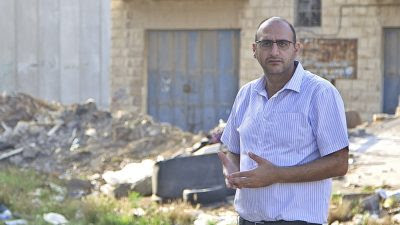
This story comes from Zoughbi Zoughbi, founder and director of Wi’am, the Palestinian Conflict Transformation Center in Bethlehem.
“We are still in shock about the inhumane treatment of my wife who has been married to me since 1990, having raised our four children together during those years. Last week she arrived very early to the airport in South Bend Indiana, in order to fly through Chicago then to Newark, and finally, to Tel Aviv. Her children and I couldn’t wait to greet her, to welcome, kiss, and hug her…Our hearts were beating rapidly as we watched to see when the airplane would arrive in Tel Aviv, so we could talk to her on the phone and hear her voice…After initially being thrilled that she landed safely and joyfully in Tel Aviv airport, we stayed rooted next to the telephone, knowing that sometimes the Israeli Authorities will want to check our connection, to ensure she is related to us. After nearly thirty years, we know they already have profiles on all our family members. Even though all the information they need is available to them, the call is a subtle way for them to add extra humiliation. This is done in spite of the fact that we have always been a peace-loving family trying to live faithfully in the Holy Land. We refuse to hate.
“…Although she is an American citizen, they openly claimed she was a criminal because she married a Palestinian…For 29 years the authorities played a game around letting her into the country or not. My wife once said that she was honored to be treated as a Palestinian refugee, to live among those of us without a safe place, without a secure future.
“…This is not just a personal story only, but a story of my people. We refuse to be discouraged and decimated by the constant hurt and humiliation. Our commitment will not be any other manner, but a way of non-violence and the pursuit of legal restitution. We reject violence. But we will not give up even as our oppressors orchestrate new ways to push us away, out of our homes…[A]s [Jesus’] followers, we will not allow their attempts to crucify us be the final word. Those in power should have learned their lesson nearly 2,000 years ago. Our Lord was not defeated by pain and humiliation, but he was resurrected, in spite of the humiliating trials of the Via Dolorosa and the pain of Golgotha. They forget He has won the victory already, in any struggle against injustice.”
MennoPIN strongly encourages trips to Palestine to see upfront the struggle Palestinians endure on a daily basis. Established justice tours usually last about two weeks and offer both visits to Holy Land sites as well as experiences with Palestinian people. Most tours also include visits to both Palestinian and Israeli activists who work for justice and freedom for the people of Palestine. Or you may want to plan a do-it-yourself tour. To find out more about tours, visit the MennoPIN website and click on the Tours to Palestine tab.Read More
A Palestinian Theology of Liberation, Naim Ateek, Orbis Books, 2017
Why Palestine Matters
No Way to Treat a Child Campaign
Mondeweiss
The Electronic Intifada
HP-Free Church Campaign
In the name of Elohim, the most merciful. May the Palestinian people receive the healing powers of our prayers. May they be granted safety, success, love, security, and hope. May they enjoy the fruits of freedom and equality that they—and all human beings—deserve. As Jews, we pray for their well-being. We remember that the Holy Land is a shared space and pray to see the day when Jews, Muslims, Christians, Druze, and all religions will live there together in peace. We hope for the day when Palestinian refugees may return. We pray that together with their Jewish neighbors they can rehabilitate their history and rebuild what could be the best place on Earth. A place of many cultures and true equality. We pray that Palestinians will be able to live lives free from violence and oppression. And we ask God to help us build bridges of peace with them. May we be the light that brings peace and hope to our Palestinian friends and to all the world. Amen. From ritualwell
March 2019 MennoPIN Monthly Update
March 2019 Monthly Update
In This Issue
Can Benny Beat Bibi? Does It Matter?
Trump’s Move to Recognize Israeli Annexation of the Golan Heights
Gaza: The Scathing UN Report
Gaza: The Great March of Return at 1 Year
Gaza: Is the Great March of Return a Turning Point?
Gaza: Rebuilding from the Ashes – A Gazan Woman’s TED Talk
Go to Palestine: Tours
Read More
Prayer

Then-Chief of Staff Benny Gantz with Prime Minister Benjamin Netanyahu during a graduation ceremony for navy officers in Haifa (Photo: Associated Press)
Shortly after Benjamin Netanyahu’s government fell apart late last fall, snap elections were called for April 9, 2019. Triggered by the attempt to extend the current law to conscript ultra-Orthodox men into the military, Netanyahu (also known as Bibi) could no longer hold his ruling coalition together. Can Netanyahu, who also faces a possible indictment for corruption, pull off another election, giving him a fifth term as Prime Minister?
In January 2019, Benny Gantz, the former head of the Israel Defense Forces (IDF), declared himself a candidate to replace Netanyahu and he immediately surged ahead in the polls for Prime Minister. Before announcing his candidacy, Gantz spoke of solving the conflict with Palestine as the highest priority facing Israel: “Our number one interest is to find a solution…We have to find a way to live together…It is important to find a solution without compromising our security.”
Both Gantz and Netanyahu have begun forming the coalitions that will help them succeed in forming a new government. With ten days to go in the campaign, Gantz’ new party, named Kahol and Lavan (Blue and White), has fallen behind Netanyahu’s Likud party by 15%, likely due to the renewed bombing of Gaza and Trump’s declaration recognizing the Golan Heights as Israeli territory. Blue and White is typically described as left-center and Likud, linking arms with smaller parties on the extreme right, is being described as far-right. Indeed, Netanyahu has fully embraced the fear-mongering tactics of his White House friend, Donald Trump, in his effort to defeat Gantz.
But can Benny beat Bibi? And, more importantly to those seeking freedom and justice for Palestinians, does it matter”? A victory by Bibi would likely make matters worse, possibly far worse, for Palestinians as those to his political right constantly pressure him for increased violence and oppression against the people of Palestine. But what would a victory by Benny mean for Palestine? Meretz, the left-wing Israeli party which strongly supports human rights for all Palestinian people, is backing Benny, and Palestinian Authority president, Mahmoud Abbas, has expressed a clear preference for Benny over Bibi.
Well-respected free-lance journalist, Jonathan Cook, is, however, far from convinced that Benny would be, in any significant way, helpful to Palestine. Recently writing in Counterpunch, Cook pointedly stated: “The reality of what Gantz stands for…is far from reassuring. [In 2014, he] led Israel into its longest and most savage military operation in living memory: 50 days in which the tiny coastal enclave of Gaza was bombarded relentlessly…Should he bring about Netanyahu’s downfall, Gantz, like his predecessor politician generals, will turn out to be a hollow peace-maker. He was trained to understand only strength, zero-sum strategies, conquest and destruction, not compassion or compromise.” Indeed, Gantz once bragged about “sending Gaza back to the Stone Age.”
What do Palestinian Christians think about the upcoming election. MennoPIN asked Sabeel Administrator, Omar Haramy, what he thought:
“We as Palestinians are eager to gain back our rights and see an end to the military occupation, and we have faith that freedom is coming. How the occupation will end is not clear. History shows us that the oppressor does not set people free, a change in the attitude of the oppressor comes as a result to pressure, or the prospect that peace brings better rewards than war. Today, the Israeli government makes lots of money from the occupation, and the pressure from the Palestinians, or the international community, is minimal, there is no serious threat from Palestinians or Arabs. Our [Sabeel] Kumi initiative is aiming to change the rules of the game, create a road map for true peace, bring liberation and justice for all. Jesus did not analyze Rome and it’s politics but empowered the marginalized. We are followers of Christ, our savior.”
Read more here about Sabeel’s Kumi initiative and see how you and your congregation can make the Israeli government feel the pressure and seek peace, not war.
Trump’s Move to Recognize Israeli Annexation of Golan Heights

Donald Trump and Benjamin Netanyahu display the signed proclamation on the Golan Heights (Photo: Euroean PressPhoto Agency)
“Historic,” “Historic,” “Historic,” the term exuberantly used over and over by Donald Trump, Mike Pence and Benjamin Netanyahu to describe the President’s tweet recognizing the annexation by Israel of the Golan Heights, a nearly 600 square mile section of southwestern Syria.
Israel seized the territory during the 1967 Six Days War and fourteen years later, in violation of international law, annexed the territory as its own. Not one single country, including the United States, recognized this land grab, calling it “null and void.” That is, until Trump declared, “After 52 years it is time for the United States to fully recognize Israel’s Sovereignty over the Golan Heights, which is of critical strategic and security importance to the State of Israel and Regional Stability.”
As it did with Palestinian territories post-1967, after annexing the Golan Heights, Israel quickly occupied the territory with troops, established Jewish-only settlements and allowed Israeli businesses to operate.
While Netanyahu and Trump both claim that Israeli security is at stake, purportedly from Iran, the availability of natural resources to exploit may play a more significant role. The Golan Heights has abundant water resources and gives Israel full control over the Sea of Galilee, which borders the Golan Heights on its eastern shore. Of even more importance is oil, which would be much easier to extract if Israel has sovereignty over the land. Perhaps not coincidentally, Jared Kushner’s family has substantial investments in Genie, the U.S. energy company Israel is working with to explore the large reserves. Does Iraqi oil fields, Dick Cheney and Haliburton come to mind?
Will Trump’s next tweet support an annexation of the West Bank and Gaza – for security reasons, of course?
Gaza: The Scathing UN Report
On February 28, 2019, the United Nations Independent Commission of Inquiry on the 2018 Gaza protests issued its conclusion on Israeli attacks on Gazan citizens during the Great March of Return. Beginning on March 30, 2018, citizens of Gaza demonstrated nonviolently the right of return to their homelands and to end the siege of Gaza. Although the protests have continued every Friday since then, the inquiry only covers the violence through the end of 2018. The report documents 183 deaths and over 6,000 injuries to Palestinians caused by live fire from Israeli troops. Since January 1, 2019, those numbers have continued to rise.
Santiago Canton chaired the UN commission and Sara Hossain was a member. They appeared on Democracy Now shortly after the report was presented and summarized some of its findings. Canton stated: “The commission found reasonable grounds to believe that the Israeli security forces committed serious violations of human rights and international humanitarian law. These violations clearly warrant criminal investigation and prosecution, and we call on Israel to conduct meaningful investigations into these serious violations.”
Hossain added: “We are saying that [Israeli soldiers] have intentionally shot children, the have intentionally shot people with disabilities, they have intentionally shot journalists.”
You can read the full report here.
Gaza: The Great March of Return at 1 Year

The Day it All Began – March 30, 2018 (Jack Guez / AFP / Getty)
The organizers of the Gaza Great March of Return have called for massive demonstrations throughout Palestine on March 30, 2019, the first anniversary of the nonviolent protest at the Gaza/Israeli border. During this first year, more than 225 people have been killed and tens of thousands injured by Israeli military snipers. Two Israeli soldiers have been killed and one other injured. The Great March of Return has called for Palestinian refugees and their descendants to be allowed to return to former homes now inside Israel and supported by international law.
The National Commission for the Great March of Return referred to the environmental event also held on March 30: “We call for our people to commemorate Earth Day and to provide the biggest support for the Great March of Return demonstrations.” They hope millions throughout Gaza and the West Bank will march with them that day. A supportive rally is being held in San Francisco as well.
Gaza: Is the Great March of Return a Turning Point?
As the Great March of Return nears the one-year mark, +972 online magazine interviewed Tareq Baconi, a young Palestinian scholar and activist, about his views on the Great March of Return and the nature of the Palestinian struggle. Here are a few of his comments:
On the Great March of Return. “The marches are a source of hope. They indicate that the politics of Hamas and Fatah have failed, that the American-led track of negotiations has also failed, but the Palestinian people remain steadfast and are still demanding their rights…The people are still holding on to their values.”
On the Great March as a Turning Point. “The Palestinian people are at a point of transition, shifting from demanding a state to demanding their rights. It’s a shift toward a civil rights movement, and Gaza is leading the way…The way the marches started in Gaza shines a light on a path forward and indicate a new development. As far as I’m concerned, it’s a source of hope.”
On Hamas’ Role in the Great March. “I believe, 100 percent, that Hamas intervenes in everything. On the one hand, these are protests based on the right of return, started by civil society, attended by hundreds of Gazans. They introduced a new politics and allowed us to glimpse into the future of the Palestine struggle…On the other hand, Hamas played a big role in providing resources, in allowing the movement to grow, and in bringing Israel to agree to concessions…I’d rather these protests had nothing to do with Hamas. At the same time, I’ve seen Hamas become a political force that can handle Israel in a way Fatah and the [Palestinian Authority] are not capable of.”
On the Future of Palestinian Resistance. “I believe that…the marches will continue. Even if they don’t continue on the same scale, there’s no political resolution on the horizon. I believe we’re going to see more popular movements and uprisings, not only in Gaza but all over, including in the diaspora.”
Gaza: Rebuilding from the Ashes – A Gazan Woman’s Ted Talk
A powerful 10-minute TED Talk by a Gazan woman on turning the ashes and rubble of war into bricks and solar powered lights, and Gazan women are leading the way. View the video here.
MennoPIN strongly encourages trips to Palestine to see upfront the struggle Palestinians endure on a daily basis. Established justice tours usually last about two weeks and offer both visits to Holy Land sites as well as experiences with Palestinian people. Most tours also include visits to both Palestinian and Israeli activists who work for justice and freedom for the people of Palestine. Or you may want to plan a do-it-yourself tour. To find out more about tours, visit the MennoPIN website and click on the Tours to Palestine tab.
A Palestinian Theology of Liberation, Naim Ateek, Orbis Books, 2017
Why Palestine Matters
No Way to Treat a Child Campaign
Mondeweiss
The Electronic Intifada
HP-Free Church Campaign
Prayer
President Trump announced on Thursday, the 21st of March, that the US will declare the occupied Golan Heights to be Israeli territory. For the past fifty years previous US administrations have viewed the Golan Heights as occupied Syrian territory, in line with the United Nations Security Council resolutions. Lord, we pray that governments and lawmakers throughout the world will raise their voices in protest at this provocative move against international law. Lord, in your mercy…hear our prayer. Sabeel Wave or Prayer. https://sabeel.org/2019/03/26/sabeel-wave-of-prayer-63/
Mennonite Palestine-Israel Network
mennopin@gmail.com | mennopin.org | facebook.com/mennopin | twitter.com/mennopinSteering Committee:
Tom Harder (Lorraine Avenue Mennonite Church, Wichita, KS)
Joy Lapp (Pleasant View Mennonite Church, Mt Pleasant, IA)
Jonathan Kuttab (Palestinian lawyer and human rights activist)
Anita Rediger (Emmaus Road Mennonite Fellowship, Berne, IN)
Joe Roos (Peace Mennonite Fellowship, Claremont, CA)
Rod Stafford (Portland Mennonite Church, OR)
February 2019 MennoPIN Monthly Update
|
||||||||
|
January 2019 MennoPIN Monthly Update
January 2019 Monthly Update
In This Issue
Gaza – 10 Years After the First Israeli War
MennoPIN Helps Push for S1 Defeat
Go to Palestine: Tours and Internships
Lenten Palestine Bible Study Resource
Kumi Now!
Read More
Prayer

Palestinian Women in Jebaliya, Gaza, in January 2009 following the Israeli Attack (Credit: Hatem Moussa/AP)
Beginning on December 27, 2008 and lasting 22 days, Israel broke a fragile cease-fire and bombarded Gaza. The military assault was called Operation Cast Lead. Thirteen Israelis died, but the toll for Gaza was 1,417 deaths, including 313 children and more than 5,500 wounded. Hamas also fired rockets on Israeli locations, but Israel’s brutal and devastating attack was completely out of proportion. At the time, Israeli generals euphemistically referred to the recurring bombings as “mowing the lawn.”
Since then, Israel has waged war on Gaza in 2012, 2014 and 2018. The Great March of Return, the nonviolent protests staged by Gaza citizens and begun on March 31, 2018 is now in its 44th week. Hundreds have been killed and thousands wounded, including last Friday, January 25 when on young Palestinian and 22 others were wounded, 14 of whom were children.
Continue to pray for Gaza.
As the vote on Senate Bill S1 approached, MennoPIN joined 15 other denominational Palestine support groups in a letter to all 100 Senators, pleading for the defeat of the measure. Officially entitled, “Strengthening America’ Security in the Middle East Act of 2019,” one section of S1 is called, “Combatting BDS Act of 2019.” This anti-BDS section would allow U.S. states and localities to retaliate against companies or individuals supporting the BDS (Boycott, Divestment and Sanctions) movement, a nonviolent effort, begun by Palestinians, to place international pressure on Israel to end the occupation and establish justice for all Palestinians.
The letter sent to Senators is entitled, “U.S. Faith Organizations Protect their Right to Boycott,” and reads in part: “We are members of faith communities in the United States whose congregations and denominations have adopted resolutions to boycott products made in Israeli settlements—built on occupied Palestinian lands in violation of international law and longstanding official U.S. policy…We are alarmed by attempts to pass legislation in the U.S. Congress that would provide legal protection for states that are penalizing participation in nonviolent, grassroots Boycott, Divestment and Sanctions (BDS) movement for Palestinian rights…The anti-BDS legislation penalizes actions taken by the Presbyterian Church (U.S.A.), the United Methodist Church, the Mennonite Church USA…and other denominations.” Read the entire letter here.
According to Rachelle Lyndaker Schlabach, Director of the Mennonite Central Committee U.S. Washington Office: “While there is more debate scheduled [January 30] on S. 1, there will not be votes until [January 31] (Thursday).”
If you have not called your Senator to express your opposition to S1, please do so right away!
Go to Palestine: Tours and Internships
MennoPIN strongly encourages trips to Palestine to see upfront the struggle Palestinians endure on a daily basis. Established justice tours usually last about two weeks and offer both visits to Holy Land sites as well as experiences with Palestinians and those who actively work for justice and freedom for the people of Palestine. Or you may want to plan a do-it-yourself tour. To find out more about tours, visit the MennoPIN website and click on the Tours to Palestine tab.
Another way to experience Palestine and contribute to justice in the region is to intern with a reputable organization doing work in Palestine. Two such groups, offering three-month internships, are Christian Peacemaker Teams (CPT) and Ecumenical Accompaniment Programme in Palestine/Israel (EAPPI):
CPT – CPT Palestine, with a long history of solidarity with Palestinians and documenting human right abuses in Palestine, has an urgent need for reservists and interns. For more information, contact Mona el-Zuhairi at monazuhairi@cpt.org.
EAPPI – EAPPI-US provides protective presence to vulnerable communities in Palestine and monitors human rights abuses. For further information, see their website here.
Lenten Palestine Bible Study Resource
For an excellent Lenten resource for your church, study group or home, click here.

Kumi Now is based on Mark 5:21-43 about two healing miracles, Jairus’ daughter and the woman with a hemorrhage. To Jairus’ daughter, Jesus says, Talitha Kumi, rise up! Just as the two were liberated from their suffering, so, too, says Sabeel, “We hear Jesus’ command to rise up in our own context…we say now is the time for action. This is why we are launching the Kumi Now initiative—a call to collectively rise up and act for liberation.”
MennoPIN is one of the Kumi Now partners and we encourage you and your congregation to become involved, too! To find out more about Kumi Now and how you can take action against the occupying forces, click here. To read their engaging Mark 5:21-43 Bible study, click here.
Read More
+972 Magazine
The Electronic Intifada
A Palestinian Theology of Liberation, Naim Ateek, Orbis Books, 2017
Why Palestine Matters
No Way to Treat a Child Campaign
HP-Free Church Campaign
Prayer
The ‘Great March of Return’ continued for the 44th consecutive Friday since March last year. A young Palestinian, Ihab Atallah Hussein Abed, was fatally wounded and 22 others, including 14 children, were wounded by live fire from the Israelis military. Lord, in your mercy…hear our prayers. Sabeel Wave of Prayer
December 2018 MennoPIN Monthly Update
|
||||||||
|
MennoPIN November 2018 Monthly Update
In This Issue
Kairos Palestine Christmas Alert
Is the U.S./Mexico Border Becoming Another Gaza?
Gaza on Fire
Airbnb Leaves West Bank Settlements
Trump Administration Threatens to Redefine Anti-Semitism
MCC Signs New Statement on Israel/Palestine
Careful What You Buy This Christmas!
Kumi Now!
Read More
Prayer
Kairos Palestine Christmas Alert

Kairos Palestine has just issued its Christmas Alert 2018. This year the Christmas Alert sheds light on the importance of restoring a new hope for Palestine, the Middle East and the world. The alert offers resources and reflections for each Sunday of Advent and inspires individuals and congregations to act to help make hope a reality in the lives of Palestinians.
Is the U.S./Mexico Border Becoming Another Gaza?

Fences and barbed wire. Tear gas and choking. Heavily armed border patrols and U.S. Army forces on one side of the fence. Desperate poverty and nonviolent presence of refugees on the other side, simply seeking a safer and better life. All very much like Gaza. Thankfully, no deaths so far, but President Trump has given the freedom to use lethal force.
On Sunday, November 25, 2018, as many of the refugees in the migrant caravan pushed to breach the border, U.S. forces, without warning, launched tear gas canisters on unexpecting refugees and would-be immigrants, including many children. The Chemical Weapons Convention of 1993, of which the United States is a part, has banned the use of tear gas on the battle field, but the U.S. has consistently used tear gas on domestic populations to control crowds, like Ferguson, Missouri. Under both the Obama and Trump administrations, tear gas has been used on refugees at the U.S./Mexico border.
The aerosol chemical compound, containing 2-chlorobenzaldene malononitrile, causes nasal passages to run, eyes to uncontrollably water and breathing becomes short and painful with a burning sensation in the throat and nasal passages. It is especially dangerous for children who do not know to close their eyes and shut their mouths. As Robini Haar, a doctor with Physicians for Human Rights, explained about children and tear gas: “Most kids scream for their parents when they are in danger. That natural, reasonable reaction to pain is detrimental in this case.” She went on to say that tear gas has harmful effects on children in both the short-term and long-term.
One refugee, Maria Meza (pictured above with her three daughters) described their experience afterward (translated): “I grabbed my daughters and started running. At that moment, I thought I was going to die with them. We ran and we fell into the mud and struggled to get up amidst the gas…We never thought they were going to fire these bombs where there were children…It wasn’t right. They know we are human beings, the same as them. It wasn’t right that they did that to the children.”
Trump’s response to the tear gassing: “Well, I do say, why are they there? I mean, I have to start off—first of all, the tear gas was a very minor form of the tear gas itself. It’s very safe…But you really say, ‘Why is a parent running into an area where the tear gas is forming and it’s going to be formed, and they’re running up with a child.’”
Just a few days before the tear gas attack, a jury found Border Patrol agent Lonnie Swartz not guilty of involuntary manslaughter in the shooting death of a 16-year-old boy, Jose Antonio Elena Rodriguez in 2012, firing nearly a dozen bullets through a U.S./Mexico border fence. All but one of the bullets were in the boy’s back. It was Swartz’s second acquittal, the first time for murder. The boy’s crime: throwing a rock.
Gaza on Fire

On November 12-13, 2018 Gaza exploded for the third time in just a few years. After a botched incursion into Gaza by Israeli commandoes on the morning of November 12, Hamas (the governing authority in Gaza with both a social service and military component) begin exchanging missiles with Israel. Israel used aircraft fire, missiles and drones to bomb targets in Gaza while Hamas sent hundreds of missiles into southern Israeli city of Ashkelon. At least 12 Palestinians were killed and numerous people in Gaza and Ashkelon suffered wounds.
A MennoPIN contact within Gaza took the photo above on a cell phone and wrote this on November 12 amid falling Israeli bombs: “Israeli warplanes continue shelling areas in the Gaza Strip. The shelling lasted for many hours, targeting sites, houses and a news channel, and resulted in a number of martyrs and wounded. Explosions were heard all over the strip.” The next day, he wrote that “Israeli forces have completely destroyed six buildings in Gaza so far today,” including family homes, a television station and a hotel.
Fortunately, an earlier-planned, Egypt-brokered cease fire ended the hostilities by the end of the second day. The terms of the cease fire included expanding fishing rights to Gazans, provision of fuel, and money from Qatar to pay Hamas and many civil workers. While some have wondered if Israeli Prime Minister, Benjamin Netanyahu, was turning a new leaf as a peacemaker, the truth probably lies elsewhere. By helping to keep Hamas in power in Gaza, Netanyahu keeps the two ruling factions in Palestine (the Palestinian Authority in the West Bank and Hamas in Gaza) divided, not just geographically, but also ideologically, lessening the ability of a united Palestine to apply effective pressure on his government. Amidst the power struggles, the people of Gaza continue to endure debilitating hardship after hardship.
Airbnb Leaves West Bank Settlements

A photograph taken last year from the Palestinian West Bank village Turmus Ayya shows the Jewish settlement, Shilo, where Airbnb had listings (Credit: Jaafar Ashtiyeh/Agence France-Presse — Getty Images)
In a victory for the BDS (Boycott, Divestment, Sanctions) movement and those working for justice in Palestine, Airbnb agreed to pull its listings out of the illegal Israeli settlements in occupied areas in Palestine. But their boycott is selective and applies to the West Bank but excluded East Jerusalem. A similar company, Booking.com, has not deleted its West Bank listings.
Airbnb’s press release states in part: “U.S. law permits companies like Airbnb to engage in business in [occupied] territories. At the same time, many in the global community have stated that companies should not do business here because they believe companies should not profit on lands where people have been displaced…When we applied our decision-making framework, we concluded that we should remove listings in Israeli settlements in the occupied West Bank.”
In response to Airbnb’s action,Israeli government officials and its supporters have responded with condemnation and threats. Minister of Strategic Affairs, Gilad Erdan denounced Airbnb’s withdrawal as a “racist political stance.” Minister of Tourism, Yariv Levin, termed the decision as “the most wretched of wretched capitulations to the boycott efforts.” The pro-Israeli NGO, Jewish Human Rights, called it “anti-Semitism pure and simple” and called for a boycott of Airbnb. BDS is working.
Trump Administration Threats to Redefine Anti-Semitism
Anti-Semitism is a serious problem in the United States. As defined by the Webster Dictionary, anti-Semitism involves: “hostility toward or discrimination against Jews as a religious, ethnic, or radical group.” Hate and prejudice against Jewish people has no place in our society whether as individuals, in government or in institutions (educational, religious or economic). MennoPIN stands firmly opposed to any expressions of anti-Semitism.
But the Trump Administration wants to take the definition of anti-Semitism one dangerous step forward. Kenneth Marcus is the Assistant Secretary of Education for Civil Rights. Marcus has proposed expanding the legal definition of anti-Semitism to equate criticism of the government of Israel with anti-Semitism. Entitled the “Anti-Semitism Awareness Act,” the proposed expanded definition has already produced a chilling effect on university campuses where, for example, a student or student group criticizing the demolition of Palestinian homes or killing of nonviolent Gaza protestors by Israel could be viewed as a violation of the act. Free speech on our campuses needs to be protected.
MCC Signs New Statement on Israel/Palestine
Mennonite Central Committee (MCC) is one of sixteen church-related organizations to sign a statement entitled, “Current U.S. Policy, Israel/Palestine, and the Churches.” The statement reads, in part:
“The current situation in the Occupied Palestinian Territories for most of the inhabitants is one of shattered hopes. Since President Trump took office in 2017, U.S. support for Israel over the concerns of Palestinians has become explicit instead of implied. As leaders of U.S.-based churches and Christian organizations with long ties and close connections with Palestinian Christians and churches, we are deeply concerned about these developments… As Christian churches and organizations in the United States, we strongly oppose this treatment of Palestinians. Most Palestinians have been peacefully protesting for 70 years in the hopes of gaining international recognition and their own state. We call on people of all faiths to stand up in support of human rights for both Palestinians and Israelis, including the right to self-determination.” To read the entire statement, click here.
Careful What You Buy This Christmas!

Kumi Now

The Sabeel Theological Education Center in East Jerusalem has created a bold new initiative to challenge the Israeli occupation of Palestine. In the face of overwhelming oppression and ineffective support from the international community, Sabeel “feels that giving up as a people on the margins is not an option.” Kumi Now (Rise Up) has just been launched and is inviting individuals, congregations, and local and international organizations to join the Kumi Now project to work as a united force for justice for Palestine.
Kumi Now is based on Mark 5:21-43 about two healing miracles, Jairus’ daughter and the woman with a hemorrhage. To Jairus’ daughter, Jesus says, Talitha Kumi, rise up! Just as the two were liberated from their suffering, so, too, says Sabeel, “We hear Jesus’ command to rise up in our own context…we say now is the time for action. This is why we are launching the Kumi Now initiative—a call to collectively rise up and act for liberation.”
MennoPIN is one of the Kumi Now partners and we encourage you and your congregation to become involved, too! To find out more about Kumi Now and how you can take action against the occupying forces, click here. To read their engaging Mark 5:21-43 Bible study, click here.
Read More
+972 Magazine
The Electronic Intifada
A Palestinian Theology of Liberation, Naim Ateek, Orbis Books, 2017
Why Palestine Matters
No Way to Treat a Child Campaign
HP-Free Church Campaign
Prayer
Fourteen Palestinians were injured by Israeli live ammunition during the 35th Friday of ‘The Great March of Return’ protests along the eastern borders of the Gaza Strip. Lord, we pray for all those who have been injured in Gaza. We pray that the international authorities would pay attention to their cries of anguish and would resolve to act to restore justice to the people of Gaza. Lord, in your mercy…hear our prayers. Sabeel Wave of Prayer
MennoPIN October 2018 Monthly Update
October 2018 Monthly Update
In This Issue
Kumi Now!
Christ at the Checkpoint USA
Gaza–A Laboratory to Boost Israel’s Military Industry Profits
Go HP-Free
Read More

Tree of Life synagogue in Pittsburgh after massacre by white nationalist anti-Semite Robert Bowers (Brendan Smialowski, AFP/Getty Images)

Kumi Now
The Sabeel Theological Education Center in East Jerusalem has created a bold new initiative to challenge the Israeli occupation of Palestine. In the face of overwhelming oppression and ineffective support from the international community, Sabeel “feels that giving up as a people on the margins is not an option.” Kumi Now (Rise Up) has just been launched and is inviting individuals, congregations, and local and international organizations to join the Kumi Now project to work as a united force for justice for Palestine.
Kumi Now is based on Mark 5:21-43 about two healing miracles, Jairus’ daughter and the woman with a hemorrhage. To Jairus’ daughter, Jesus says, Talitha Kumi, rise up! Just as the two were liberated from their suffering, so, too, says Sabeel, “We hear Jesus’ command to rise up in our own context…we say now is the time for action. This is why we are launching the Kumi Now initiative—a call to collectively rise up and act for liberation.”
MennoPIN is one of the Kumi Now partners and we encourage you and your congregation to become involved, too! To find out more about Kumi Now and how you can take action against the occupying forces, click here. To read their engaging Mark 5:21-43 Bible study, click here.
Christ at the Checkpoint USA
The first ever Christ at the Checkpoint USA conference saw a variety of speakers and attendants including supporters of MennoPIN.
Christ at the Checkpoint has been a biennial event put on by Bethlehem Bible College, encouraging Evangelical leaders to come to Bethlehem, and meet with Palestinian Christians to see firsthand the effects of their Christian Zionist theology. This year for the first time, the organizers teamed up with Oklahoma City based pastors led by Darrell Cates, to bring the experience to the United States.
Speakers included representatives of Bethlehem Bible College, Jack Sara, Munther Isaac and Grace Zoughbi; well-known Palestinian Christian leaders, Father Elias Chacour, Alex Awad, Sami Awad, Mubarak Awad, and MennoPIN steering committee member Jonathan Kuttab; Jewish leaders in peace and justice work, Rabbi Michael Davis, and Mark Braverman; prominent American and international Christians, Bishop Robert Hayes, Bob Roberts, Gary Burge, Stephen Sizer; Mae Cannon, and the heroic Palestinian Muslim from Gaza, Dr. Izzeldin Abuelaish.
A unique aspect of Christ at the Checkpoint is to allow those with conflicting views to be heard at the conference. The organizers invited the most prominent voice in the “New Christian Zionism movement,” Gerald McDermott.
The conference’s many viewpoints still resulted in a clear portrail of the dire situation in the West Bank and the Gaza strip, the negative effects that colonial Christian theologies like Christian Zionism have had on the region, and the need for Christians to embody a theology of peace. To hear the sessions, or get more details about the conference, click here.
Gaza–A Laboratory to Boost Israel’s Military Industry Profits
Israeli Army Brigadier General Roei Elkabetz told a 2012 convention on border control in El Paso, TX, that “we have learned a lot from Gaza. It’s a great laboratory.” He was referring to Israel’s arms industry, the largest homeland security industry in the world.
Guy Keren is the CEO of iHLS, one of Israel’s leading homeland security firms. Speaking at a drone conference he helped organize, Keren explained how Gaza has become the ideal testing ground for new products all year round, giving Israel and iHLS a competitive advantage over other countries and their military industry. Keren said that “we are checking our systems live…because we are in a war situation all the time.”
According to the Electronic Intifada, “Gaza is widely perceived as a human Petri dish—to improve killing capacity and cultivate pacification methods.” The Danish military scholar, Leila Stockmarr, put it this way: “It is central to Israel’s cutting-edge military and policing capacities that new pieces of technology are developed and tested in a concrete situation of controlling populations, such as in the Gaza Strip.”
Since the Great Return March began on March 30, 2018, Israel’s military giants have tested the following weapons on nonviolent demonstrators:
- Sea of Tears Drones—appropriately named for drones that drop tear gas on crowds
- Shocko Drones—drones that unleash “skunk water”
- Butterfly Bullets—among the deadliest bullets every used, they explode on impact
It is horrendous that a live, captive population of human beings are being used to test new and lethal military weapons to control populations and generate profits for the Israeli weapons industry. There is no doubt that the “deadly exchanges” of military practices between the United States and Israel have and will continue to benefit both country’s endless-war economies.
Support Palestinian Human Rights and Go HP-Free
Reach out to your pastor, church council and congregation to encourage your church to sign the HP Free Church pledge, committing to not buy HP computers, printers, inks, and other products until HP stops profiting from occupation and human rights violations. For more on the HP-Free Church Campaign go here.
Read More
The Battle for Justice in Palestine, Ali Abunimah, Haymarket Books, 2014
A Palestinian Theology of Liberation, Naim Ateek, Orbis Books, 2017
Why Palestine Matters
No Way to Treat a Child Campaign
The Palestinian Portal Resource
HP-Free Church Campaign
Prayer
The “Great March of Return” passed its 31st Friday amid increasing violence from the Israeli forces and militants amongst the legitimate protestors. More than 230 people were injured and five killed, including 19-year-old Nassar Abu Tim. Lord of the suffering, we pray for a commitment to human rights by all sides and the protection of all lives. We pray for effective international intervention to ensure justice. We pray for humanitarian aid and rebuilding where destruction has occurred. We pray for peace and for justice in our homes and on our city streets. Wrap all and each of these people in your love. Let them hear: ‘Come to me you who suffer and are burdened, and I will give you rest (Matthew 11:28). Lord, in your mercy, hear our prayer. Sabeel Wave of Prayer
MennoPIN September 2018 Monthly Update
|
||||||||
|
MennoPIN Monthly Update – August 2018
|
||||||||
|